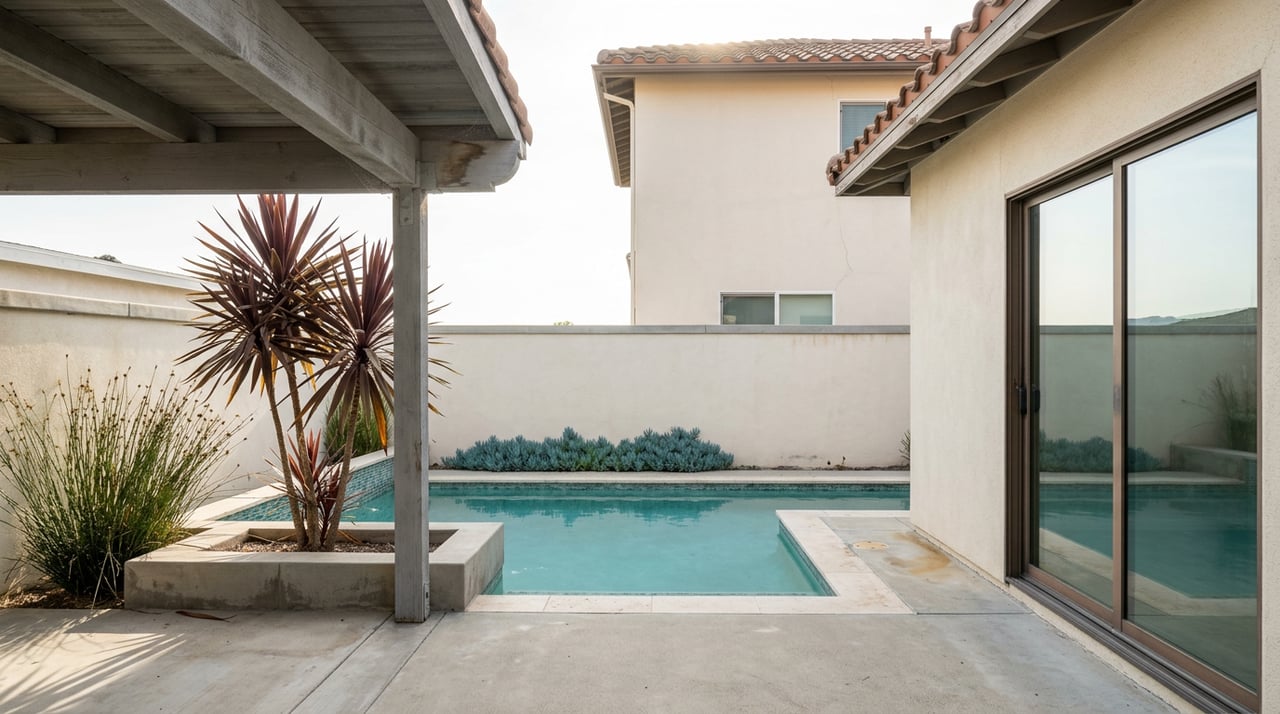
Here's a scenario that plays out more often than most Huntington Beach buyers expect. A house closes without a hitch. The Natural Hazard Disclosure notes an oil well on the parcel, the buyer skims it, the inspection comes back clean, escrow closes on schedule. A year later, that same buyer applies for a permit to add a pool, build an ADU, or push out the back of the house. The permit stalls. Not because of the house. Because of what's still sitting on the lot from a hundred years ago.
That's the part the standard disclosure package doesn't spell out. It tells you a well exists. It does not tell you that the well, active or long abandoned, can sit between you and your next building permit until a city fire official signs off on it separately.
What the Disclosure Form Actually Covers
California's Transfer Disclosure Statement and Natural Hazard Disclosure exist to tell a buyer what they're purchasing, not what they can do with it afterward. The California Department of Real Estate's own consumer guide on disclosures walks through categories like ordnance locations, industrial uses, and Mello-Roos bonds, and an oil well on a parcel typically surfaces somewhere in that packet as a known condition of the property.
That satisfies the seller's legal obligation. It does not answer the question a lot of Huntington Beach buyers actually care about, which is whether they can pull a permit to build. Those are two different checks, run by two different parts of the transaction.
The Rule Buried in the Oil Code
Huntington Beach has its own municipal oil code, separate from the state disclosure forms, and it governs what happens next. Under Chapter 15.32 of the Huntington Beach Municipal Code, no building or grading permit can be issued for a parcel with an active or abandoned oil well until the property owner demonstrates compliance with the city's approved abandonment specification, known internally as City Specification No. 422, and gets sign-off from the Fire Code Official. A well that's gone idle doesn't get to sit there indefinitely either. Once the Fire Chief orders it abandoned, the operator has six months to complete the work.
That single requirement is the actual friction point. A buyer can close on a home with a documented well on the lot and live in it for years without ever touching that rule. The moment they file plans for an addition, a pool, or a new structure, the city checks the well status before it checks anything about the design. If the well hasn't been abandoned to current specification, the remodel timeline now includes a well abandonment project that has nothing to do with the contractor the buyer hired.
Not Ancient History
It's tempting to treat this as a quirk from Huntington Beach's oil-boom past, something that mattered in 1920 and shows up today only as trivia. The city's high school still calls its teams the Oilers, which tells you how deep that history runs. But the mechanism is live right now, not archived.
In March 2026, the California Department of Conservation held a public meeting in Huntington Beach specifically about plugging and sealing a well at a residential address on 21st Street, walking neighbors through the timeline, construction activities, and safety measures for the work. That's a state agency running an active well-abandonment project in a residential neighborhood this year, not a decades-old case study.
The city has its own version of the same problem closer to home. Huntington Beach has operated oil wells on its own City Hall property since acquiring the site in 1971, and the city is now plugging and abandoning them because they're no longer economically viable to keep producing. If the city's own civic property carries this issue, it's a fair bet plenty of private residential lots nearby do too.
And this isn't limited to quiet, long-dormant wells either. It's not unusual to see a Huntington Beach residential listing near the pier and Main Street marketed partly as an income property, with active wells still generating real barrels and real monthly revenue alongside the home itself. The oil field that built this city in the 1920s never fully went away. Parts of it are still pumping.
How This Actually Shows Up at the Table
The practical difference comes down to timing. Buyers who plan to renovate need to ask the well question before they write an offer, not after they own the house. Sellers who know their lot carries a well, active or abandoned, are better off getting ahead of the abandonment status rather than letting a buyer discover the six-month clock during their own permit application.
| If you're buying | If you're selling |
|---|---|
| Ask whether any well on the parcel has been abandoned to current City Specification No. 422, not just capped decades ago | Pull any abandonment or plugging records you have before listing, especially if permits were pulled for past additions |
| Confirm with the Fire Department whether a grading or building permit would trigger a compliance review | Disclose known well history clearly rather than relying on the buyer to find it in the NHD packet |
| Factor potential re-abandonment costs into your offer if you're planning to build within a few years of closing | If a well is still producing, be ready to explain the royalty or income arrangement as part of the sale |
| Ask your title company whether an oil and gas lease or mineral rights reservation is recorded against the parcel | Loop in a geotechnical or environmental consultant early if a buyer's lender asks for documentation |
The Methane District Is a Related, Separate Check
Oil wells aren't the only legacy of a century of production. Parts of Huntington Beach also fall inside a city-designated methane district, an overlay that governs how new construction handles soil gas migrating up from old oil operations and organic-rich ground. Confirming a parcel sits inside that district is a separate step from confirming well status, and it can require its own mitigation, things like sub-slab vapor barriers or venting, before a remodel or rebuild moves forward. The state also maps parts of the city for liquefaction risk given its low, water-saturated coastal soil. Neither condition is a defect in the house. Both are conditions of the ground that a buyer planning any real construction should understand before, not after, they own the lot.
Quick Answers Before You Sign
Does every Huntington Beach home have an oil well issue? No. Plenty of parcels have no well history at all. The issue only applies to lots where a well, active or historic, sits on or near the property, and a title search or the seller's disclosure is where that first surfaces.
If the well was capped decades ago, am I in the clear? Not necessarily. The city's own code distinguishes between older abandonment work and abandonment to current specification. A well capped under 1970s or 1980s standards may still need re-abandonment before a permit is issued, which is worth confirming with the Fire Department rather than assuming.
Does this affect insurance too? It can. Lot-level conditions tied to the city's oil history, including the methane district and liquefaction zones, are the kind of thing an insurer may ask about separately from standard homeowner's coverage, so it's worth raising with your carrier alongside your lender.
Where This Leaves You
None of this means avoiding Huntington Beach or treating a well on the title report as a reason to walk. People buy, sell, and build additions on these lots regularly. It means asking a more specific question earlier in the process than most buyers think to ask, and it means sellers who get ahead of the paperwork tend to have smoother closings than the ones who let a buyer find out during their own permit application.
If you're weighing a purchase in Huntington Beach with future building plans in mind, or you're getting ready to list a property with oil history on the title, Doug Merlino can walk through what's actually recorded against a specific parcel before you're locked into a contract.
This article is general information, not legal, tax or financial advice. Consult a qualified professional about your situation.