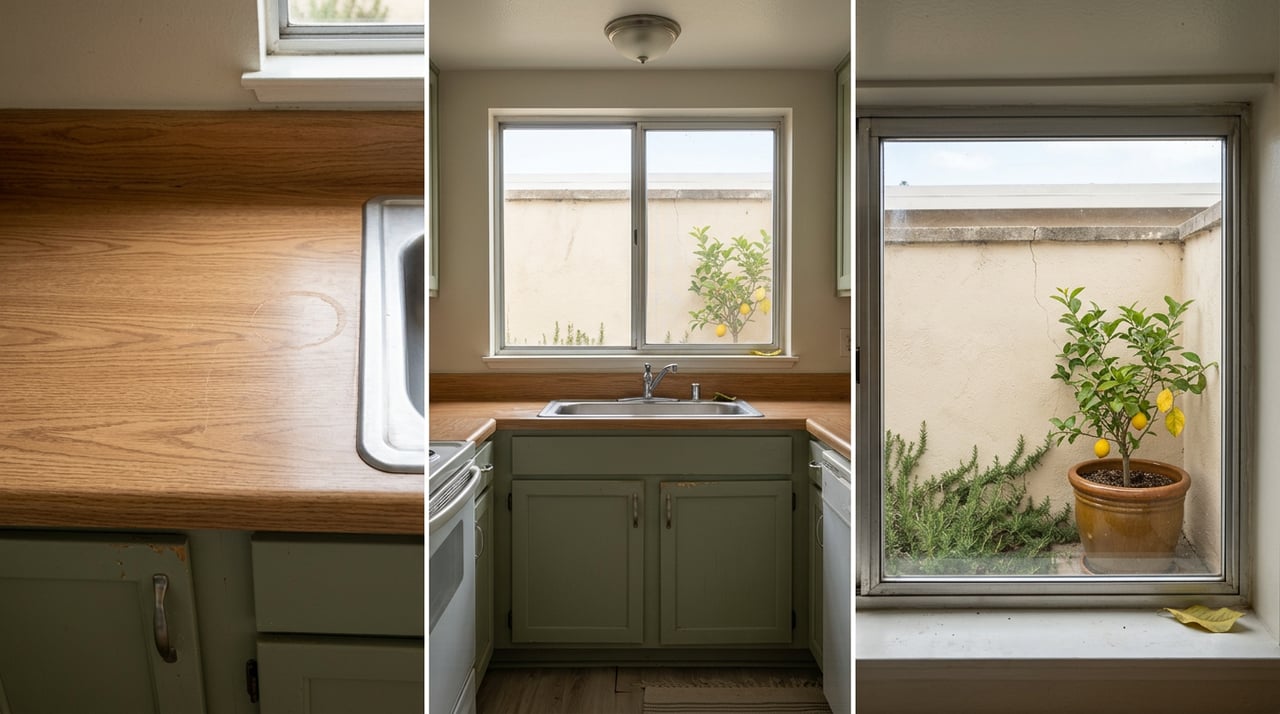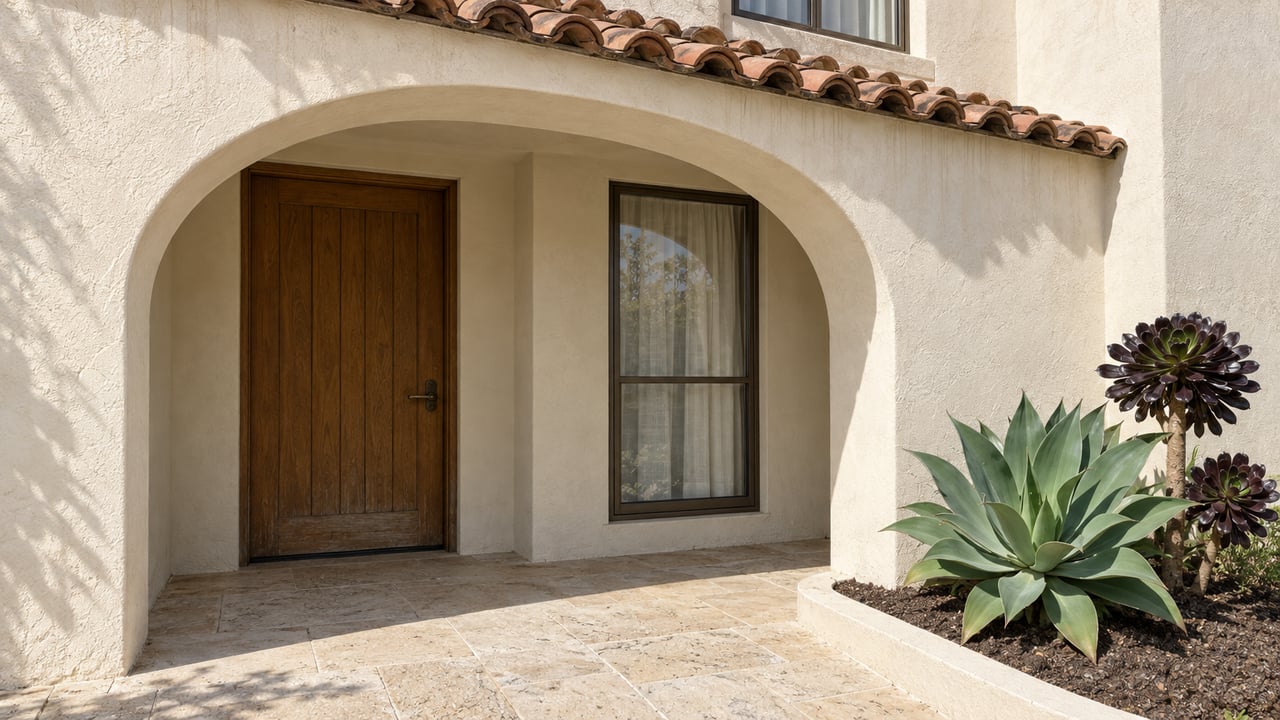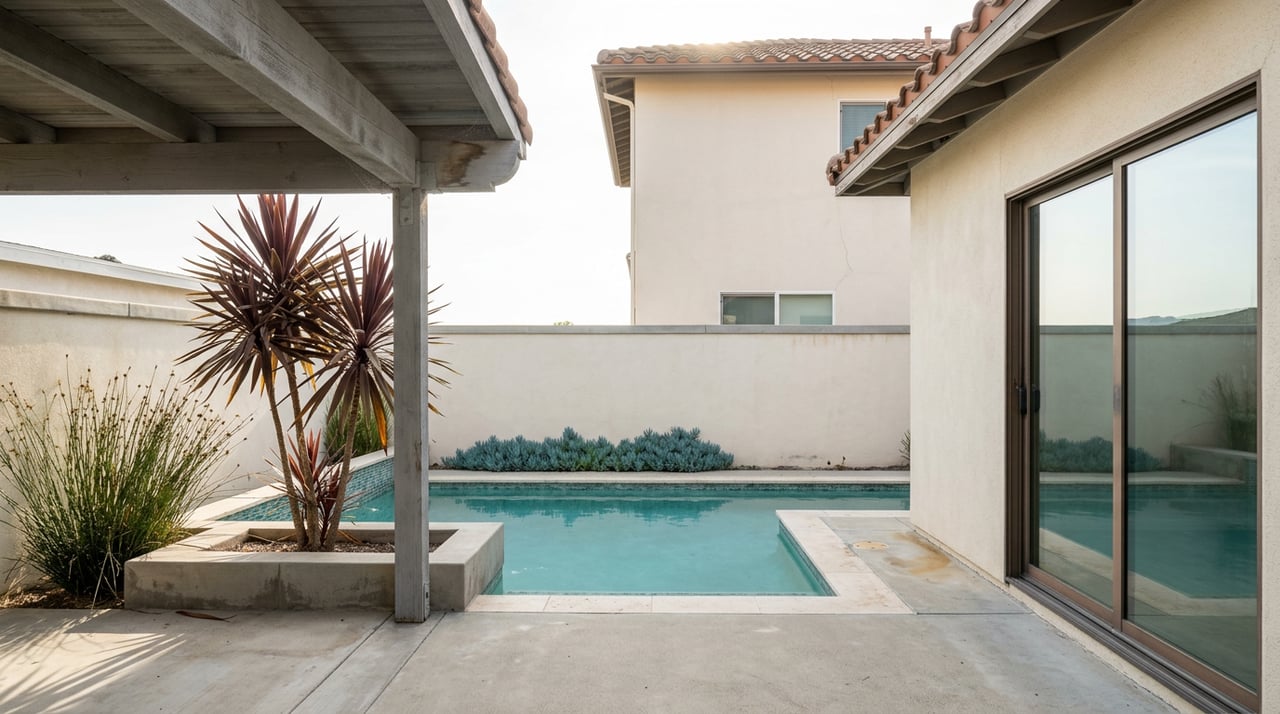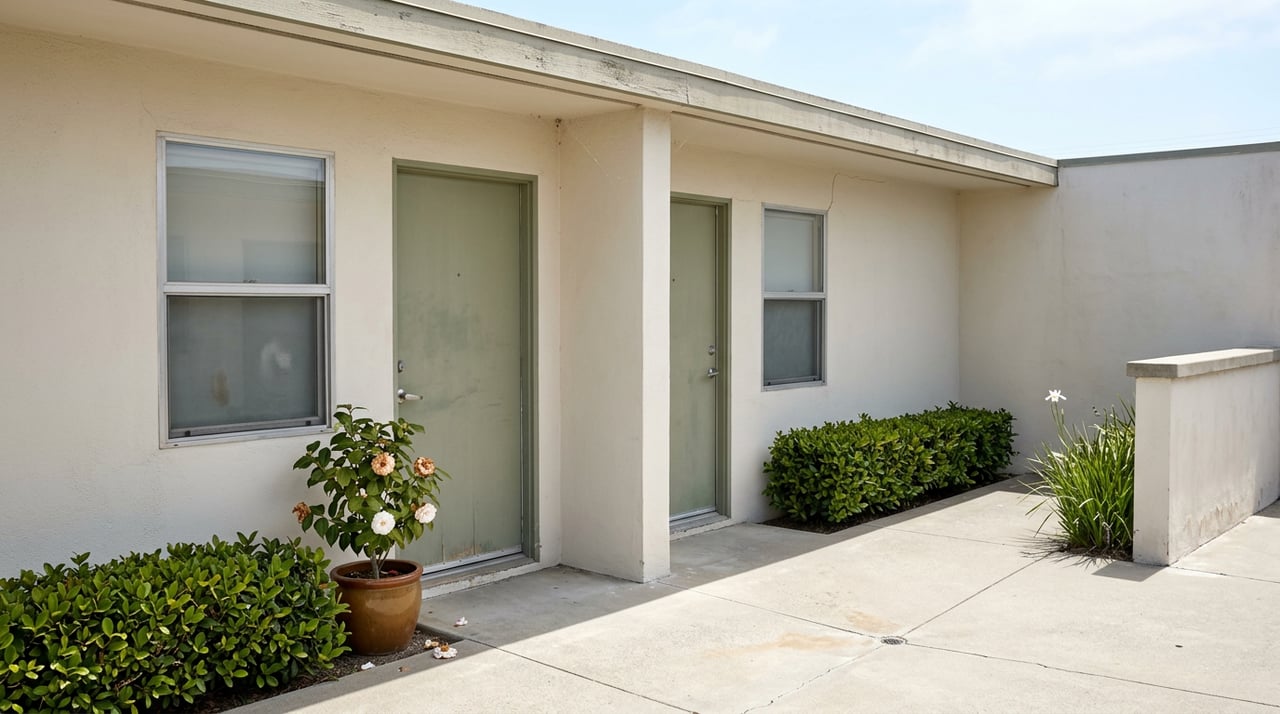
A buyer priced out of Costa Mesa's single-family market almost always lands on the same fallback: shrink the search to condos. That instinct makes sense on a spreadsheet. It falls apart the moment you actually run the numbers against the city's other overlooked category of starter property: the small multi-unit building you can buy as an owner-occupant, live in one unit of, and let the other tenants help cover your mortgage.
That is not an investment strategy reserved for landlords with a portfolio already. It is FHA financing, available to a regular first-time buyer, on a duplex, triplex, or fourplex, for 3.5 percent down. In a city where the single-family market rewards speed and punishes patience, that detail changes who should be looking at what.
What $1.65 Million Actually Buys Right Now
Start with the single-family data, because it explains why buyers feel stuck. Over the six months ending in early August 2026, 214 single-family homes sold in Costa Mesa at a median price of $1,650,000, and they moved fast, a median of just 11 days on market. Meanwhile the 70 single-family homes currently active carry a median asking price of $1,754,495 and have been sitting for a median of 35.5 days.
Here is the detail that should reset how you read those numbers.
Homes that actually sold closed at a median of $989.90 per square foot. Homes still sitting on the active market carry a lower median of $927.15 per square foot.
That is backwards from what most buyers assume a slow market looks like. The homes commanding the highest price per square foot are the ones getting snapped up in under two weeks. The ones priced lower per square foot, on paper the better deal, are the ones nobody is buying. The likely explanation is size: efficient, well-priced smaller homes are getting bid up and gone, while larger listings that look like more house for the money are the ones with a harder sell. Twenty-seven homes are currently pending at a median of $1,749,000, tracking close to the active median, which tells you where serious offers are actually landing. Nineteen listings expired over the same period at a median asking price of $2,150,000, after sitting an average of 118 days. That is the ceiling nobody is paying.
If you are waiting for a below-median single-family deal to show up and sit long enough for you to negotiate, this data says don't hold your breath. The homes that fit that description sell in under two weeks, not the 35 days the rest of the active pool is averaging.
The Building Next Door Runs on Different Math
Costa Mesa's small multi-family stock exists because of decisions made decades before anyone reading this was house hunting. The city's older R2-MD zoning carries a grandfather clause allowing legal lots as small as 6,000 to 7,260 square feet, if they existed as of March 16, 1992, to carry two dwelling units even though the district's standard minimum lot size is far larger. That grandfather clause is why duplexes, triplexes, and fourplexes are scattered through Costa Mesa's older neighborhoods rather than clustered in one obvious corridor, and why the resulting inventory looks different depending on which side of town you're standing on.
On the Westside, the stock skews older and more value-add. A fourplex at 795 Shalimar Drive, sitting inside a federal opportunity zone, is currently listed as the lowest-priced fourplex in the city. On the Eastside, proximity to Newport Beach pushes rents and prices up: a pair of adjacent fourplexes at 132 and 136 E. Bay Street are being marketed together as an 8-unit package in what listing brokers describe as one of the county's most sought-after rental locations, and a triplex at 203 Ogle Street, bordering Newport Heights, is under contract in the same submarket. Closer to downtown, a triplex at 408 Ford Road sits walking distance to The Triangle and the Newport Boulevard and 19th Street retail corridor, an area that has seen substantial redevelopment in recent years.
None of this is exotic. It is ordinary mid-century construction that happens to carry two, three, or four legal units on one lot, which is exactly the property type FHA's multi-unit program was built for.
The Financing Door Most Condo Shoppers Never Check
FHA lets an owner-occupant buy a 2-to-4 unit property with the same 3.5 percent down payment used for a single condo, as long as one unit becomes the buyer's primary residence for at least a year. Rental income from the remaining units counts toward qualifying and can materially reduce the buyer's real monthly housing cost, since it is offsetting a mortgage on the whole building rather than sitting in someone else's pocket.
The tradeoffs are real and worth knowing before you fall in love with a listing:
- Minimum credit score is 580 to use the 3.5 percent down payment option, or 500 with 10 percent down
- Two-unit purchases require cash reserves equal to one month of mortgage payments; three and four unit purchases require three months
- The buyer must occupy one unit as a primary residence for a minimum of one year
- A stable two-year income and employment history is expected, same as for any FHA loan
This is why fourplexes function as Costa Mesa's most accessible house-hacking vehicle rather than duplexes or triplexes alone. A four-unit building spreads the rental offset across three tenants instead of one or two, which is meaningful leverage against a mortgage payment, but it also means three sets of tenants, three sets of maintenance calls, and three renewal conversations a year instead of one.
Why the Numbers Differ by Side of Town
The Westside's older, more value-add multi-family stock and the Eastside's premium-rent buildings aren't two random data points. They reflect the same demand drivers, applied unevenly by location. Orange Coast College, Vanguard University, and the 17th Street corridor all sustain steady tenant demand across the city, which keeps vacancy low almost everywhere. But the Eastside sits closer to Newport Beach, and that proximity is priced into both purchase price and achievable rent. The Westside carries more of the aging, unrenovated stock that value-add buyers are drawn to precisely because there's room to improve it and raise rents over time.
That split matters for a buyer choosing between "cheaper to buy" and "stronger rent roll on day one." Neither answer is wrong. They are different bets on the same mechanism.
What You're Actually Signing Up For
Costa Mesa has no local rent control ordinance, but California's statewide AB 1482 caps annual rent increases at 5 percent plus the local rate of inflation, up to a maximum of 10 percent, on most multifamily properties older than 15 years. Given how much of Costa Mesa's small multi-family stock dates to the 1950s and 60s, that cap applies to nearly all of it. Anyone underwriting future rent growth on an older fourplex should model against that ceiling, not against whatever the current market rent happens to be.
The other cost is not financial. Living in the same building as your tenants means you are the maintenance call, the noise complaint, and the person collecting rent from someone who might also be your neighbor at the mailbox. That's a genuinely different daily experience than owning a single-family home or a condo where an HOA absorbs the friction. Some buyers find it manageable and even prefer the built-in income offset. Others discover a year into the FHA occupancy requirement that they'd rather not do it again.
The Comparison Worth Making Before You Widen Your Condo Search
If the single-family market has you priced out and a condo search feels like the only remaining lever, it's worth running the multi-unit math before you commit to that direction. A fourplex on the Westside, bought with 3.5 percent down and three units of rental income helping cover the note, can put a buyer into ownership with a real monthly cost that a condo at a similar price point cannot match, because a condo offers no offsetting income at all. An Eastside triplex trades a lower entry price for stronger, more durable rents. Neither is automatically the better move. Both are options a condo search alone will never surface.
A Few Questions Worth Asking Before You Tour One
Do I need prior landlord experience to use FHA financing on a multi-unit property? No. FHA's 2-to-4 unit program is open to first-time buyers. The requirement is that you occupy one unit as your primary residence for at least a year, not that you've managed rentals before.
Does Costa Mesa have its own rent control ordinance? No. The city relies on California's statewide AB 1482, which caps annual increases at 5 percent plus local inflation, up to 10 percent, on qualifying buildings older than 15 years.
Is a fourplex cash reserve requirement different from a single-family FHA loan? Yes. Two-unit purchases require one month of reserves. Three and four unit purchases require three months, reflecting the added complexity of managing more tenants.
If you're comparing a Costa Mesa condo against a small multi-family building and want help running the real numbers on a specific listing, Doug Merlino and the team at BeachPointe Properties know these submarkets block by block. Get your instant home valuation and let's talk about what actually pencils out for you.